Treatments - Cottage Epilepsy Center
Most forms of epilepsy can be treated with medications. However, approximately 35 percent of epilepsy patients continue to have seizures while on medication. For such patients, the Cottage Epilepsy Center clinicians may recommend dietary changes, surgery or a combination of therapies.
Patients may find that one treatment no longer works as well as it used to for various reasons. It is important for patients and family members to track their response to treatments so that the health care providers can recommend changes or new treatments when needed.
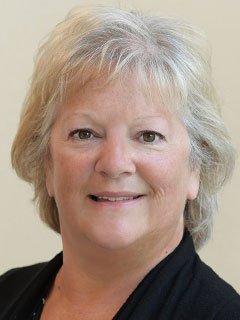
Our Nurse Navigator
For more information on the Cottage Epilepsy Center, please contact Karen Secore, MS, APRN, CNRN, at 805-832-3633.
To make an appointment at the Cottage Epilepsy Center, call 805-569-7820.
To schedule an EEG or other imaging exam, call 805-563-7000.
Karen's Bio
Dietary Treatments
There are specific dietary treatments that can be recommended such as the ketogenic diet. This is intended for patients one year or older who have frequent seizures and who do not respond well to anti-seizure medications. The ketogenic diet is a very strict diet. Most patients find that they have fewer seizures on this diet, although results vary. Please speak to your neurologist to learn more or to seek a referral for dietary treatment for epilepsy.
Vagus Nerve Simulator
The Vagus Nerve Simulator device, also known as VNS, is an electrical generator implanted under the collarbone and connected by a wire to the vagus nerve in the neck. Stimulating this nerve has proven effective in reducing some types of seizures. It can be activated by swiping a special magnet over the implanted generator.
The device is also programmed to deliver stimulation on a predetermined schedule. Changes in stimulation can be made in the outpatient setting.
Responsive Nerve Stimulator
The Responsive Nerve Stimulator device, also known as RNS, is a neurostimulator that is implanted into the skull. Electrodes are precisely placed in the brain to areas where the seizures originate and connected to the stimulator. The device is “trained” over time to recognize the onset of the seizure and provide stimulation to that region therefore limiting the spread of the electrical activity.
RNS works best in patients where the region of seizure origin is identified and requires precise placement.
Laser Interstitial Thermal Therapy (LITT)
Laser Interstitial Thermal Therapy (LITT) is a minimally-invasive surgical technique using MRI-guided laser light to ablate unhealthy brain tissue. It can be an effective treatment option for recurrent and hard to reach brain tumors and lesions. It is also used to treat certain types of epilepsy.
Other Traditional Epilepsy Surgeries
If the region of seizure origin is identified and can be safely removed, then a surgical resection may be recommended by a neurosurgeon. Various resections are possible.
Location and Appointments
For more information or to schedule an appointment, please call 805-569-7820
To schedule an EEG or other imaging exam, call 805-563-7000.
Address and Parking: 400 W. Pueblo St., Santa Barbara CA 93105. Free parking is available.
Map and Directions
Lobectomy
A lobectomy is the removal of part of the brain. Almost 80 percent of partial seizures in adults begin in the temporal lobes, which are located on both sides of the head just above the ears.
A portion of one of the temporal lobes can be removed if tests consistently show that seizures originate there. The success rate for becoming seizure-free after a temporal lobectomy is approximately 70 to 90 percent.
Your doctor may perform other surgeries such as removal of tumors, abnormal collections of blood vessels, and congenital lesions. Lesions and their surrounding tissue will be removed if monitoring shows that seizures begin in that area.
Corpus Callosotomy
During this surgery, the doctor temporarily removes a portion of the skull to gain access to the brain. Nerve fibers that connect one side of the brain to the other, called the corpus callosum, are severed.
This is done to keep seizures from spreading from one side of the brain to the other. No tissue is removed. This is most helpful for grand mal seizures and drop attacks. Seizures are not usually stopped entirely by this procedure; however, the effects are generally less severe. Often patients may have a seizure on only one side or the other.
What to Expect After Epilepsy Surgery
After surgery, patients are followed very closely by the Cottage Epilepsy Center medical and surgical team.
It is important that patients or family members tell the physician or nurse if there have been any problems functioning in everyday life, or if you have trouble coping with a life without epilepsy. These are very important concerns and our team can help.
Patients will remain on medication initially and will be gradually tapered off of medications when appropriate. It is important to remember that it took many years to develop difficult-to-treat epilepsy, and it will take time to recover as well.
Support Group and Resources
Cottage Epilepsy Center offers a support group for patients and their families to discuss issues related to the condition and the affect that it has on the patient and family unit. It is also a forum to learn from staff and other patients that have gone through similar experiences.
For more information, call 805-832-3633.